

Hassan Abu Qamar: From Projects and Writing to a Voice for Change on “Yalla Change”
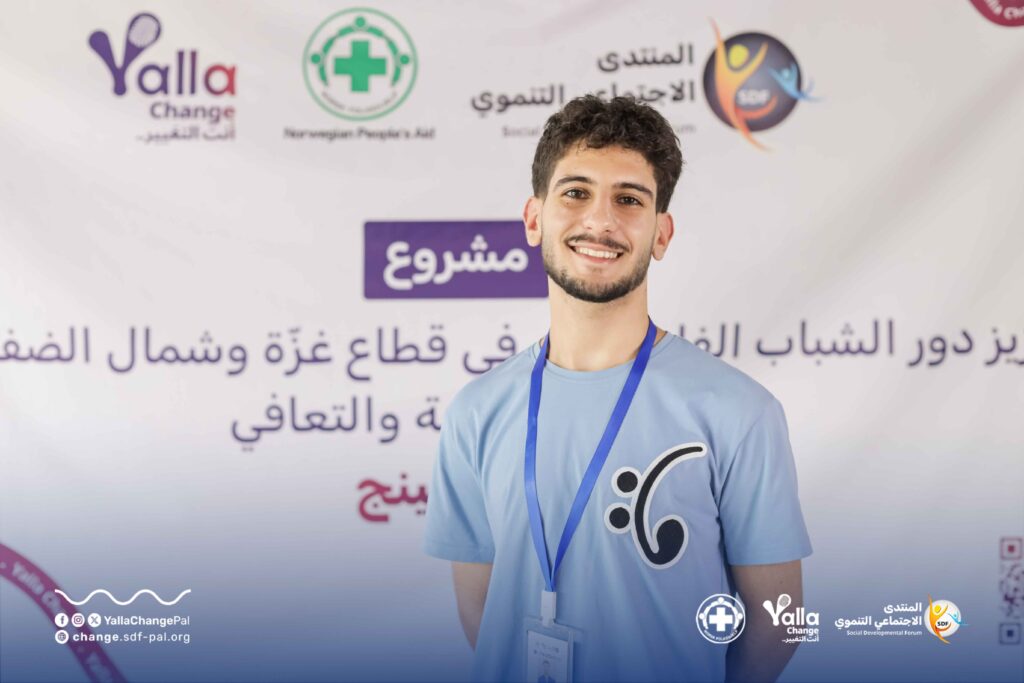
In a small tent in Deir al-Balah, sits Hassan Samir Abu Qamar. A young man not yet eighteen, he speaks with a maturity beyond his years, his story woven from the threads of genocide, displacement, entrepreneurship, and a journey into journalism and community work.
With a faint smile, he says, “I’m Hassan Abu Qamar, 18 years old, a 2023 high school graduate. Before the genocide, I had a business called ‘Success Store’… I was selling products and connecting with people. But the genocide changed everything.”
His small venture was a source of pride and his first window into the world of entrepreneurship, until the genocide brought it all to a halt. His business stalled after it became impossible to import goods from Egypt, and mere survival became the daily priority.
Writing and Finding His Voice
Yet, Hassan never stopped searching for his path. He explored through self-directed learning, studying Spanish and English, and taking specialized courses in web development and content creation.
During one displacement, armed only with a small notebook and a pen, he began writing about life in Gaza under bombardment. It was then he discovered his talent for journalism.
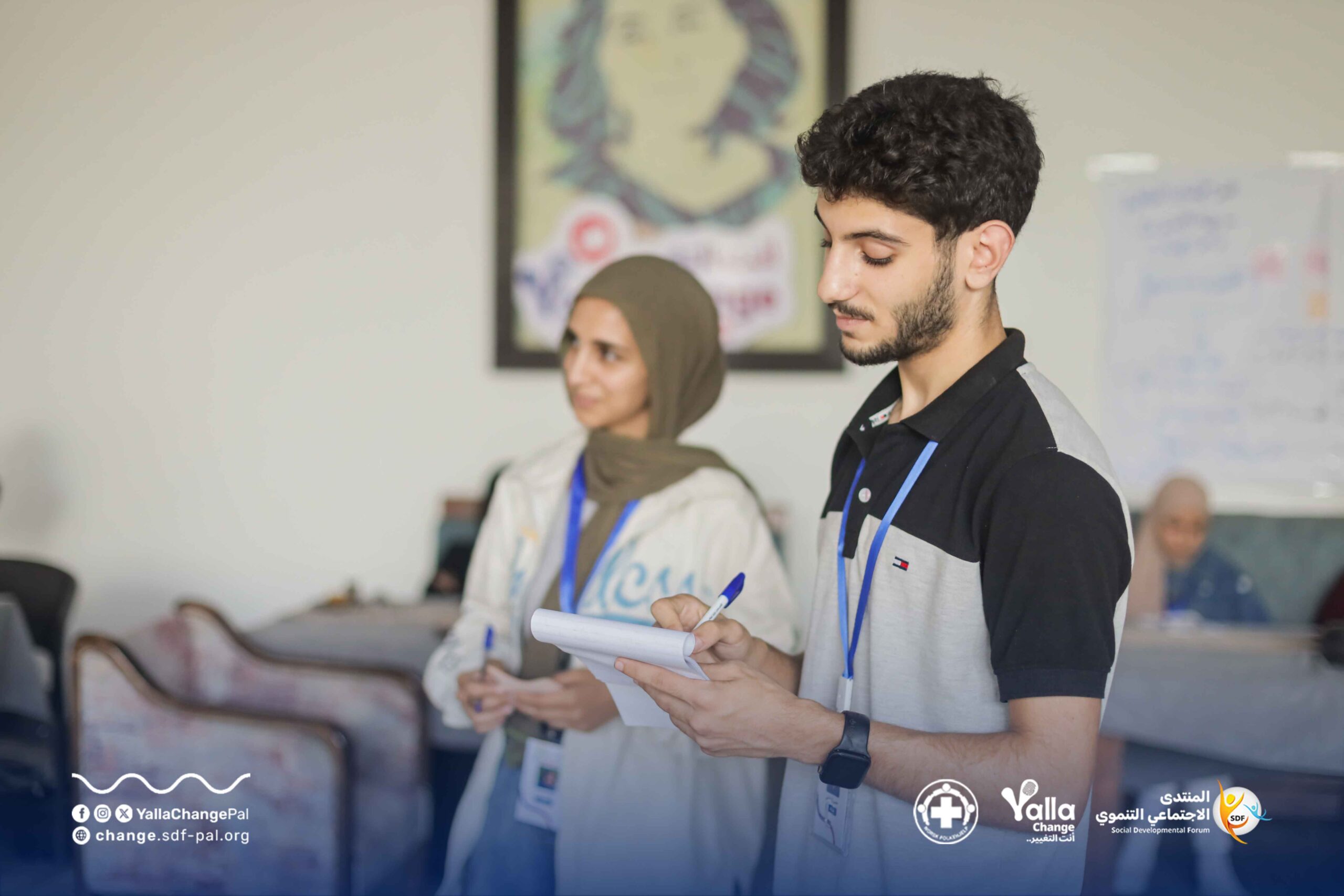
These initial efforts quickly evolved into a professional pursuit. He published his first article with the We Are Not Numbers project, and soon his writing was appearing in international media like Al Jazeera, The Guardian, The Nation, and The Washington Report. These were more than articles; they were the raw dispatches of a young man determined to amplify his city’s voice to the world.
However, his writing also unveiled a new challenge. He started receiving messages from followers abroad wanting to help the people he wrote about, but he lacked the knowledge to manage these initiatives safely and effectively. He didn’t yet know that the “Yalla Change” program would be the turning point he needed.
Making Change
In September 2025, Hassan joined the sixth season of the “Yalla Change” program, implemented by the Social Development Forum in partnership with the Norwegian People’s Aid (NPA) in the Gaza Strip and the West Bank.
He found in the program a genuine space for learning, participation, and expression, realizing his individual energy could be channeled into tangible, collective impact.
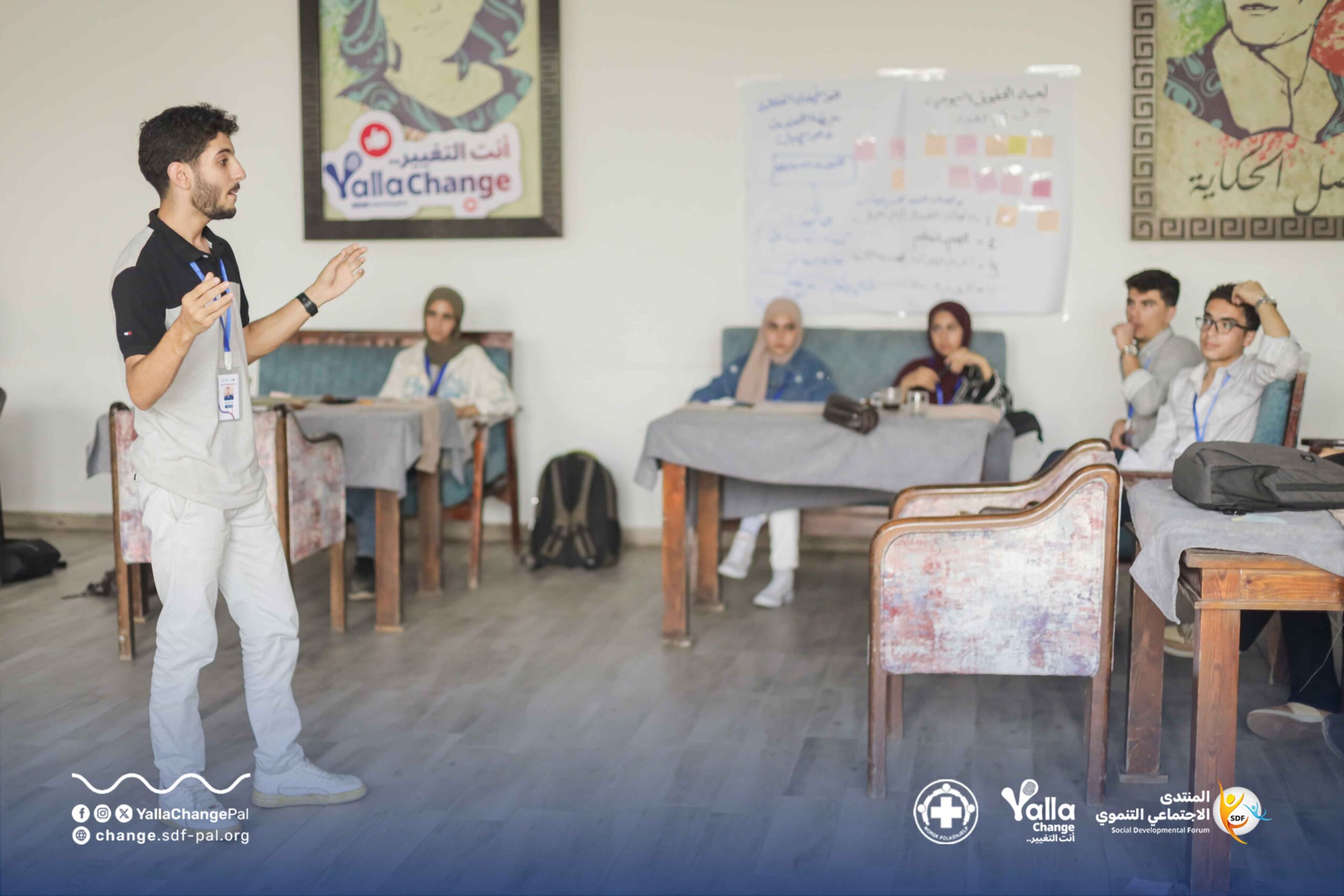
Over six intensive days of training, Hassan engaged with various themes like citizenship, advocacy, and community initiatives. Advocacy resonated with him most deeply, as it directly addressed his reality. In the training sessions, he learned how to effectively direct efforts toward the right channels. Hassan discovered how to professionally craft advocacy and lobbying letters that deliver results.
We learned how to write advocacy letters the right way. You can’t just ask the World Health Organization (WHO) to open the border crossing; you need to know the correct entity. This was exactly what I was sseking, as I sometimes look for evacuation opportunities or grants, and now I know exactly who to direct my requests to.
Hassan Abu Qamar, participant in the Yalla Change 6 program
Speaking about the experience, it was clear he had found a new tool for influence that went beyond writing. He now knew how to strategically connect people’s needs with the institutions capable of providing support.
From his perspective, programs like “Yalla Change” do more than just train youth; they build self-confidence and open horizons to the future. In a society grappling with constant hardship, these initiatives give young people a sense of agency and restore their belief that their voices can have a real impact.
For Hassan, the training was more than just sessions; it was a profoundly human experience. His relationship with the team was marked by mutual respect and warmth, and he felt a strong human connection with the coordinators that transcended age or experience.
The First Step
After the training ended, Hassan noticed his friends and social media followers asking about “Yalla Change.” Many wished for a similar opportunity, a clear sign, he believes, of the deep thirst among Palestinian youth for such spaces.
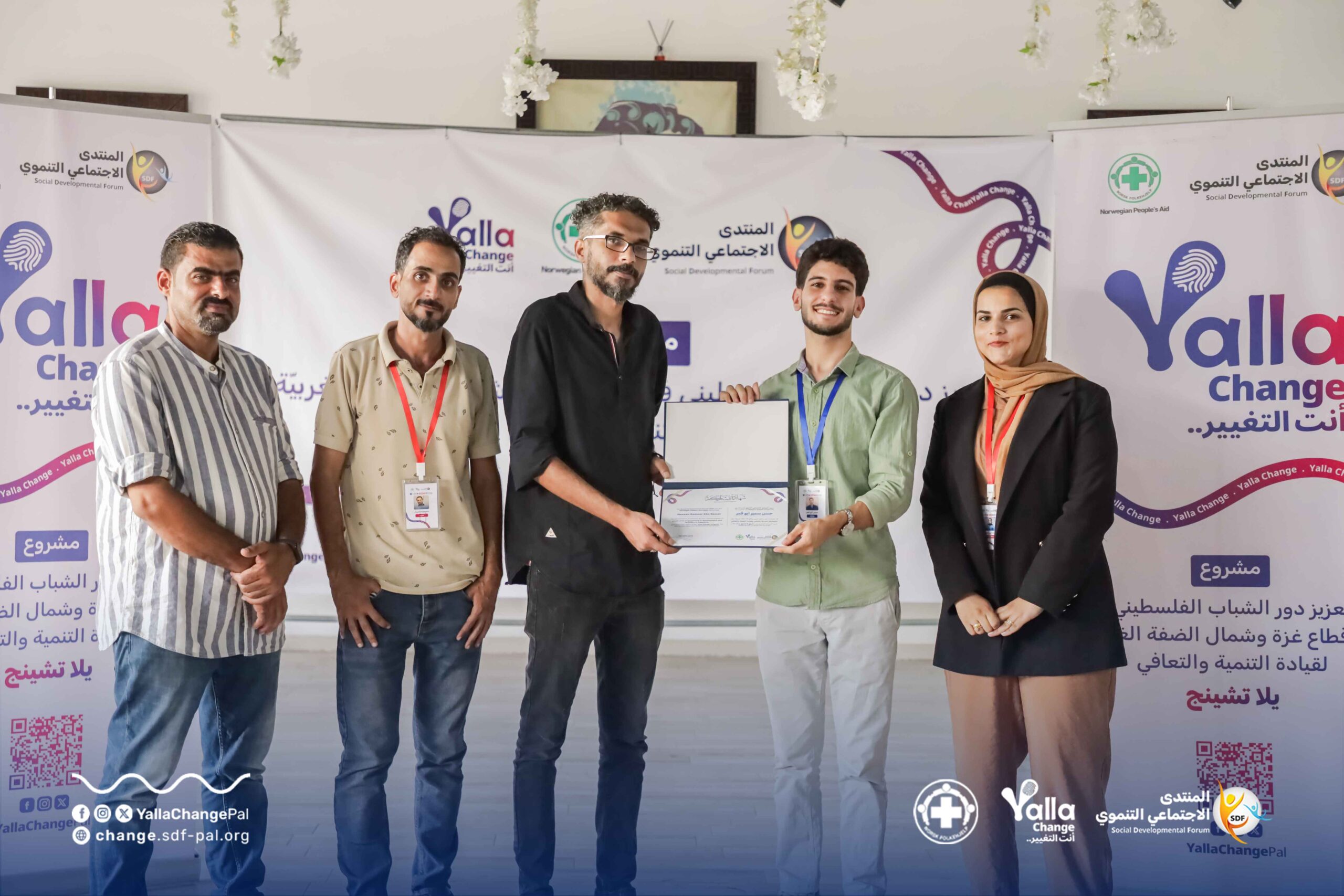
Hassan emerged from the experience with a sharper sense of self and his own impact. He now speaks about the future with confidence, about his desire to be on the ground, connecting with people and writing new stories rooted in reality that touch our shared humanity. He believes what he witnessed during the genocide must not be forgotten, but transformed into a personal commitment to carry with him wherever he goes, to keep sharing people’s suffering and their stories, striving to be a bridge between Gaza and the world.
“Even if nothing changes, what matters is that we try,” he says with a smile. “Writing might not stop a genocide, but it can change one person. And one person can change a great deal.”
With this simple, inspiring conviction, Hassan moves forward, armed with his pen and his passion, believing that change always starts with an idea and a first step, even one born in the midst of a genocide.