

From Displacement to Dedication: Samah’s Mission in the Classroom
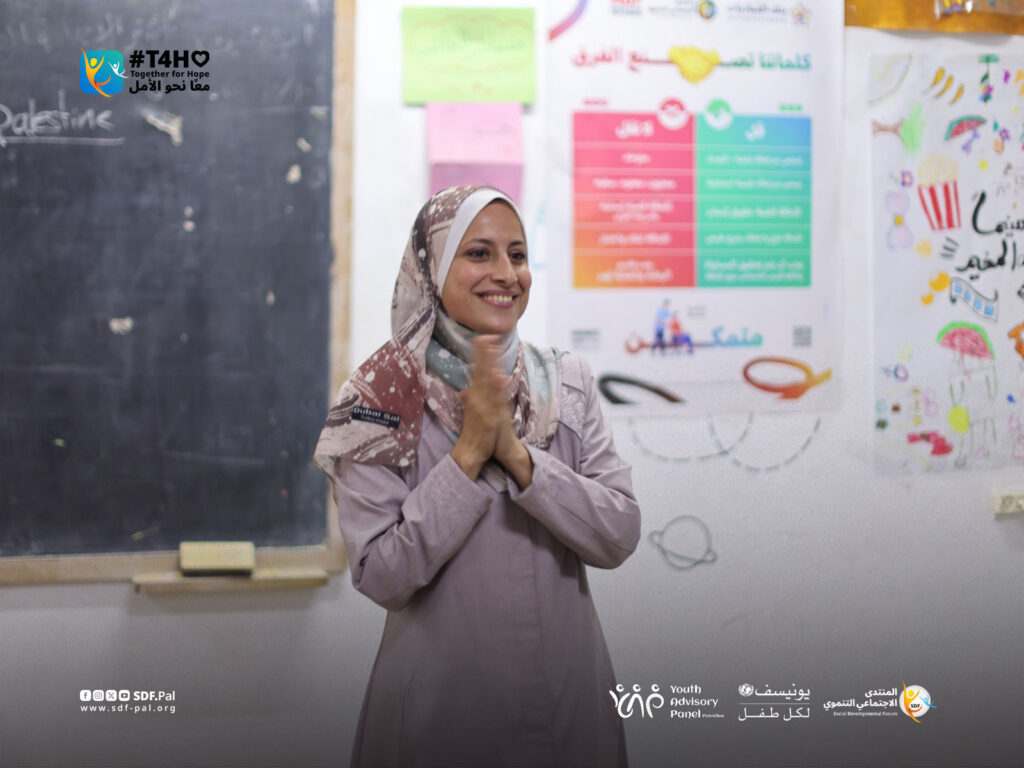
Before the genocide struck Gaza, the life of Samah Ismail, a thirty-year-old teacher from Al-Zawayda in the Middle Area of the Gaza Strip, followed a quiet rhythm. She had studied psychology, built a career in the field she loved, and together with her husband, created a small life filled with hope, despite eight long years of waiting before she received the news of her first pregnancy.
Samah had planned to welcome her daughter into their new home, a dream finally within reach as her husband had begun to stabilize his work as a driver with a new car, a goal they’ve worked hard on. But the morning of October 7th changed everything.
From Displacement to Rebirth
Samah tells us her life was turned upside down, transformed into a relentless cycle of displacement, fear, and the search for safe shelter. “At first, we couldn’t imagine the war would last,” she adds. “We thought it would be a matter of days before we returned. But the bombing was everywhere, we no longer knew where safety was.”
She fled with her family from Al-Zawayda to multiple areas, carrying only basic necessities and some documents, leaving behind her home, memories, community, and unfulfilled dreams.
Amid the displacement, she experienced a pregnancy unlike any other, every kick from her unborn child mingled with the sound of explosions. One night, as bombing intensified, labor pains began. “Getting to the hospital wasn’t easy,” she recounts. “Transport was almost nonexistent, and the roads were rough and filled with rubble.”
Navigating through the destruction under Israeli bombardment, she finally reached Al-Aqsa Martyrs Hospital in Deir Al-Balah, where she gave birth to her daughter amid explosions and the cries of grieving mothers. “It was a night of both birth and survival,” she describes. “I came out of the operating room unable to believe I was still alive, that my daughter had taken her first breath surrounded by so much death.”
Just days later, she was forced to flee again, carrying her newborn and her anxiety, searching for a safer place. Her sole focus became survival, how to find food and milk for her only child, and how to persevere.
While surviving on minimal aid, she began thinking of returning to work. She felt the pain she endured was not hers alone, but a collective trauma experienced by every child, woman, and displaced person in Gaza.
From Suffering to Service
Samah now works with the “Youth Networks for Child Education and Well-being” project, implemented by Social Development Forum in partnership with UNICEF. She serves as a psychosocial support specialist, standing side-by-side with teachers to support children and provide whatever help they need.
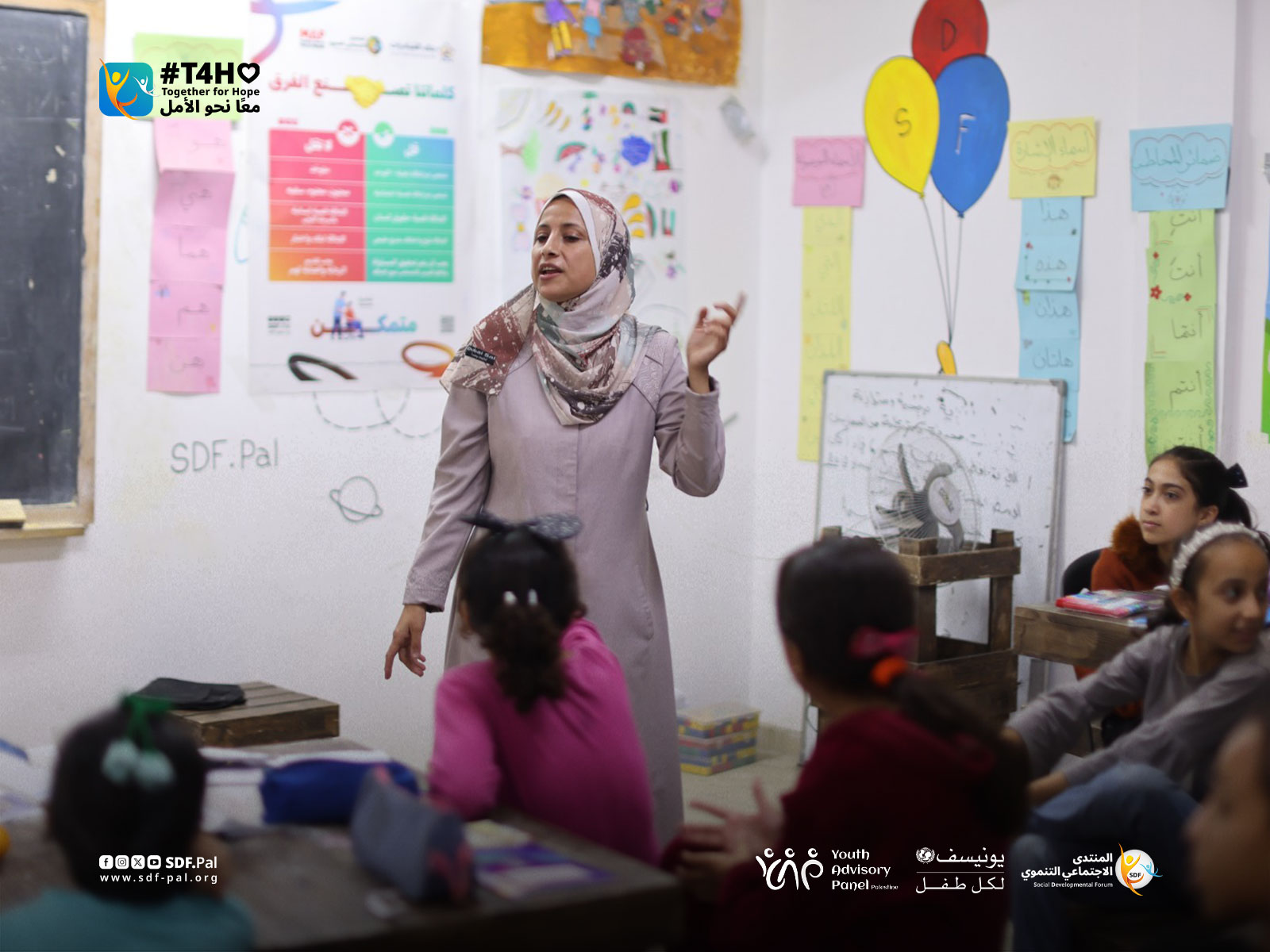
She applied for the position after seeing an online ad, despite connectivity blackouts and mobility challenges. Her interview was postponed multiple times due to bombing, but she never lost hope.
After weeks of waiting, a phone call changed her life’s course, she was told she had received the top ranking and would soon start working. “I cried from happiness,” she shares. “I felt that God was rewarding me after all this patience.”
She began her work in the educational spaces established by SDF in Deir Al-Balah, Al-Bureij, and Khan Younis. Her mission: to plant a sense of safety in children who had endured displacement, destruction, and the loss of loved ones.
At first, she noticed children flinching at every sound, speaking little, and drawing scenes of bombardment and death. Over time, they began to laugh and play again. “Every one of their laughs felt like a small victory over the war,” she notes.
Her daily challenges were immense. She sometimes walked for hours to reach her workplace due to the lack of transportation, returning in the evening carrying both her daughter and her exhaustion.
We worked amid the rubble and under continuous Israeli bombardment. But we believed we were rebuilding something more important than buildings: the human spirit. I saw the same fear in my students’ eyes that lived inside me. I told myself: My role as a psychologist isn’t over, it’s just begun.
Samah Ismail
Hope Cannot Be Bombed
Through psychological support sessions, drawing, and play, Samah discovered heartbreaking stories behind each child, a girl who lost her mother, a boy living in a tent with five siblings, another unable to sleep due to the sounds of shelling still echoing in his memory. “I saw myself in them,” she says. “Every time I helped a child smile, I felt I was healing myself too.”
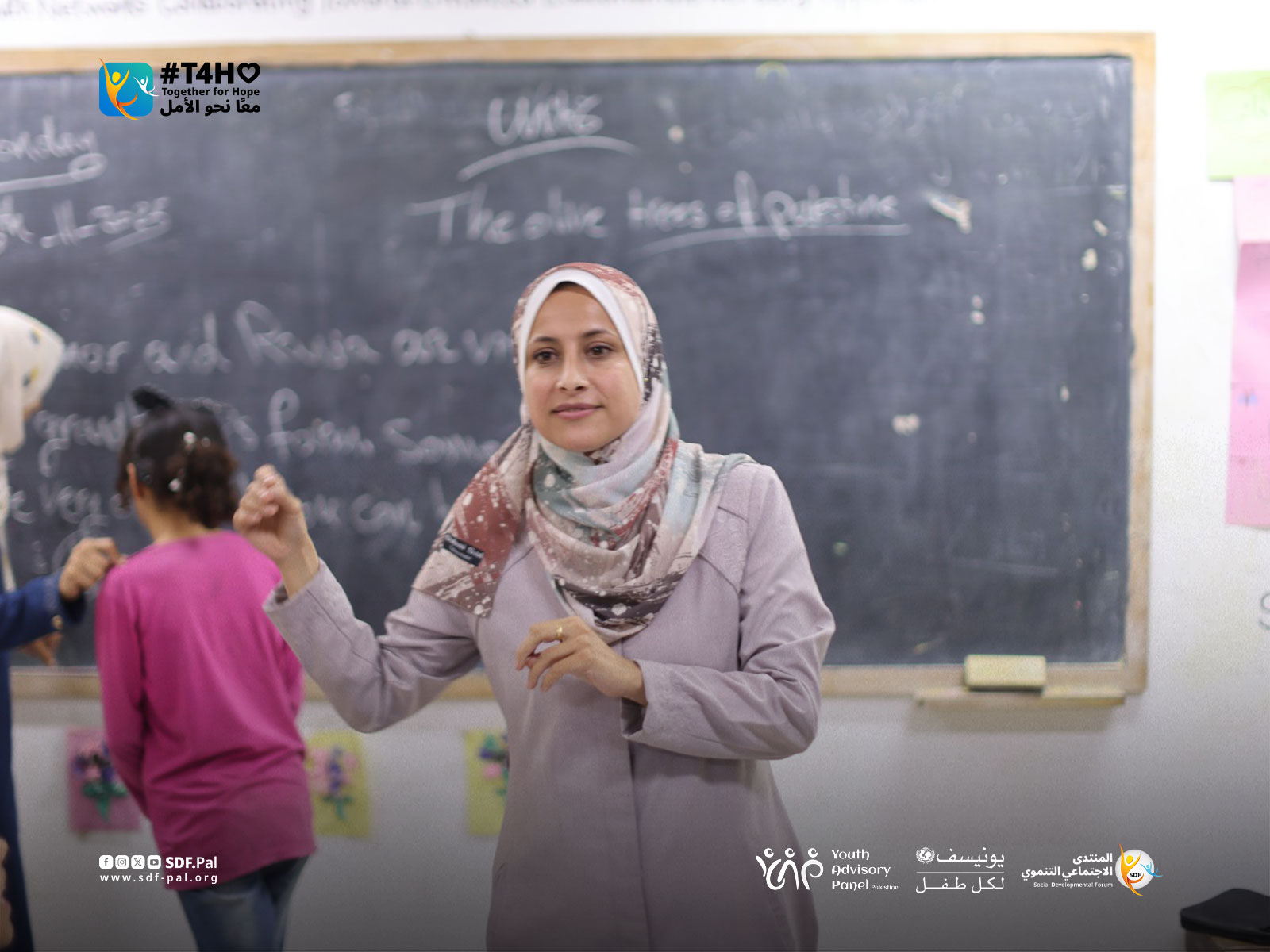
One moment remains unforgettable: when a child approached her on a cold morning and said, “Good morning, Miss! Last night I dreamed the war had ended!” His words gave her a renewed dose of hope to begin her day.
Though two years of genocide have passed, Samah continues steadfastly supporting children. She now carries a deeper awareness of life’s value and a stronger determination to persist. Her personal motto has become: “Hope cannot be bombed, unlike everything else they’ve destroyed here. We always have the power to begin again. That, in short, is the story of Gaza.”
She dreams of one day traveling to a safe place where her daughter can experience a normal life, yet her heart remains bound to Gaza, where she has forged a new meaning of life and resilience. Her daughter was born in genocide, and in that struggle, Samah too was reborn: stronger, and more convinced than ever that humanity is stronger than destruction.