

Ghina Daher: Resisting Genocide Through Education
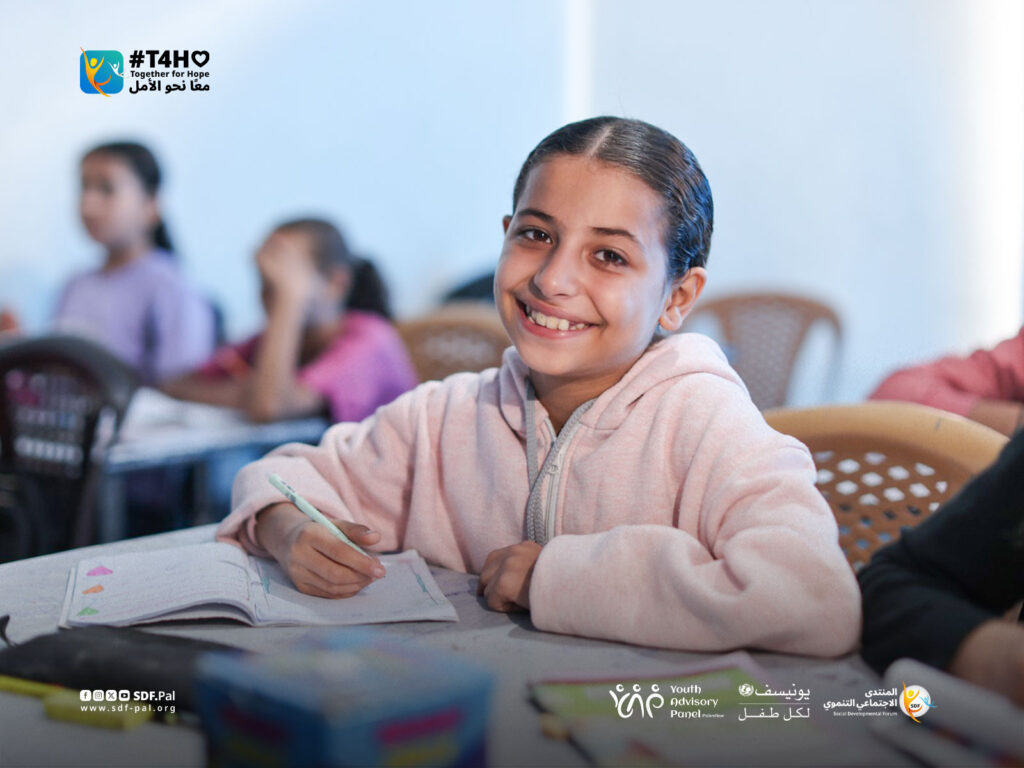
From the school line to the path of displacement, this is how life changed for 11-year-old Ghina Alaa Daher. She once lived in Sheikh Zayed, northern Gaza, in a home that was her safe world, preparing her schoolbag each morning and walking to school with her friends.
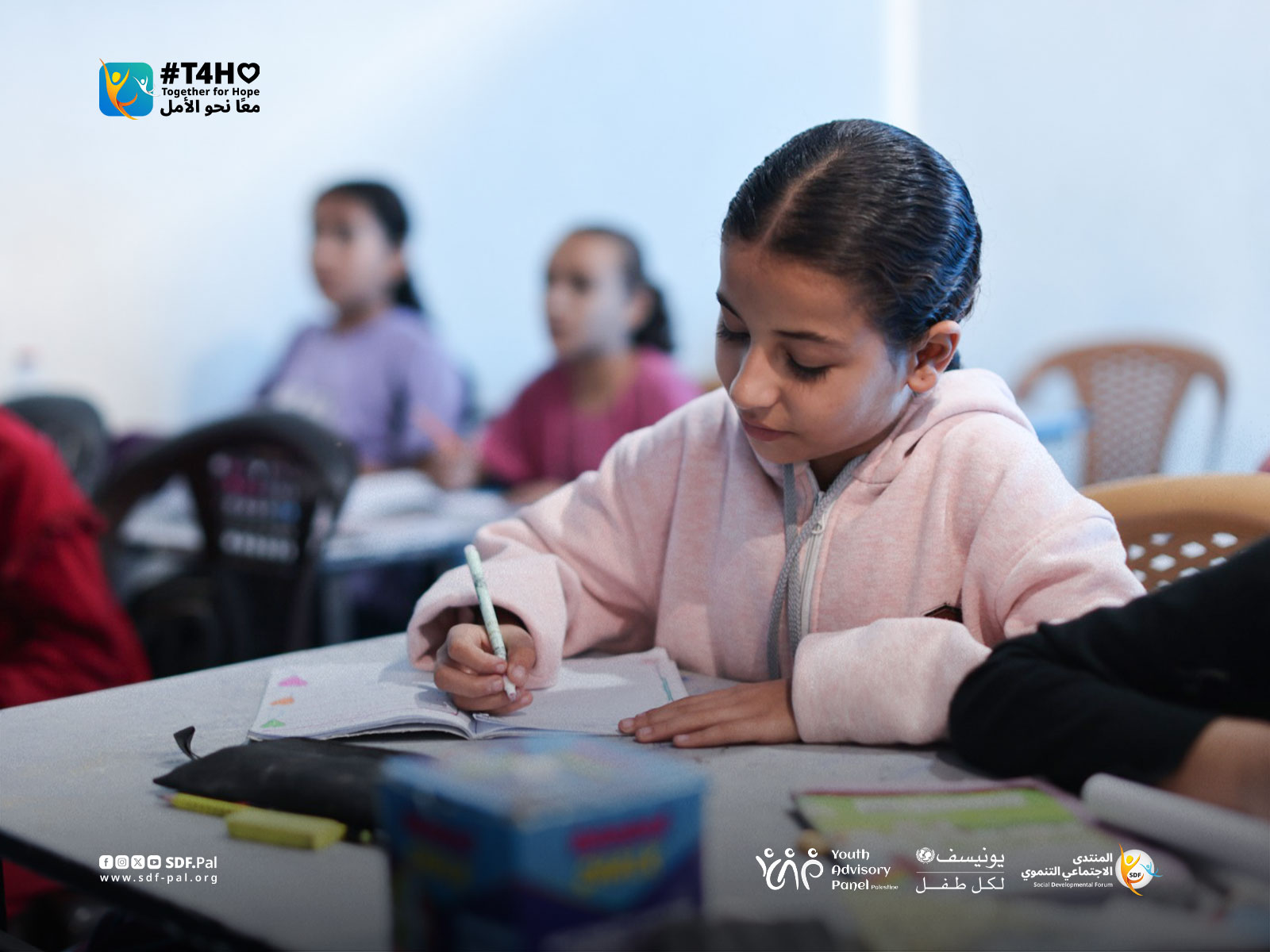
Despite her family being displaced 21 times, from one place to another, young Ghina has finally returned to her studies. Carrying her small backpack, she now sits inside a tent that serves as a safe educational space established by Social Development Forum, a “temporary classroom” in a displacement camp in southern Gaza.
She writes with trembling letters, but says with a steady smile: “I thought I would never learn again. But I’m back.”
Behind this small return lies a long story of loss, movement, and the search for safety. Since the war on Gaza began, Ghina’s family moved repeatedly under bombardment, trying to preserve whatever remained of a normal life for a girl whose only dream was to return to school.
A Long Story of Loss
The young girl says she loved her school deeply and participated passionately in the morning broadcast program, competing with classmates to prepare it, until the morning of October 7, 2023, when everything changed.
I woke up early to take part in the school broadcast. I heard explosions and rockets from every direction. My father told me no one was going to school that day. I sat there hoping it would only last a short while, but from that day on, I was deprived of those precious details.
What Ghina, one of the students at the educational spaces, told us
No one knew that morning would mark the start of a genocide that would steal childhood across Gaza. Ghina was forced into displacement with her family, from one home to another, from east to west, from neighborhood to neighborhood, and eventually from north to south, 21 times in total.
She describes displacement: “You feel like you’ve left your soul behind in your home. I’m still displaced within the Gaza Strip, but I don’t feel at ease. I’m a daughter of Northern Gaza. I no longer have neighbors I know or childhood friends. The homes of our alley are gone, and so is the face of my city, ruined by Israeli bombing.”
The genocide completely destroyed Ghina’s home, but she still dreams of it, falling asleep to memories gathered in every corner and moments with her family.
At one point, her family sought refuge at the Indonesian Hospital, which was later besieged by Israeli forces. Amid the fear and confusion, Ghina, despite her youth, possessed something many others didn’t: the ability to speak multiple languages.
With unusual courage for a child her age, she stood before Israeli soldiers and spoke to them in English, explaining that the hospital held children, women, and wounded people.
Her mother says proudly: “Ghina was our voice. She spoke calmly and intelligently, translating our fear into words others could understand.” From that moment, Ghina was no longer just a displaced child, she became a small symbol of courage in her home and camp.
It’s important to note the large gap the genocide left in her life, two full years without education. There was no internet for online learning, no schools accepting students, no teachers, and no environment to support learning.
Longing for Knowledge
The young girl describes her reality during two years of genocide: “I could see my schoolbooks but couldn’t open them. Studying was a dream.” She tried enrolling at schools but received the same harsh reply: “You are Welcome, but wait for our call until a spot is cleared for you.”
The call never came. She felt her right to education fading away. Yet her mother and sister refused to surrender to their circumstances, until they learned about the educational space established by SDF in Deir Al-Balah. Her mother went to register, expecting rejection as before, but was surprised by immediate acceptance.
During a brief truce, when the family was displaced to Al-Zawayda in the Middle Area of the Gaza Strip, her mother and sister began teaching her using educational booklets. Their tent became a small classroom; sheets of paper turned into gateways to hope.
I felt like I had returned to my old school, like life had come back to me after I thought I’d lost all chance to learn under the harsh conditions of genocide.
Describing her enrollment in the SDF’s space
A Wholesome Learning Environment
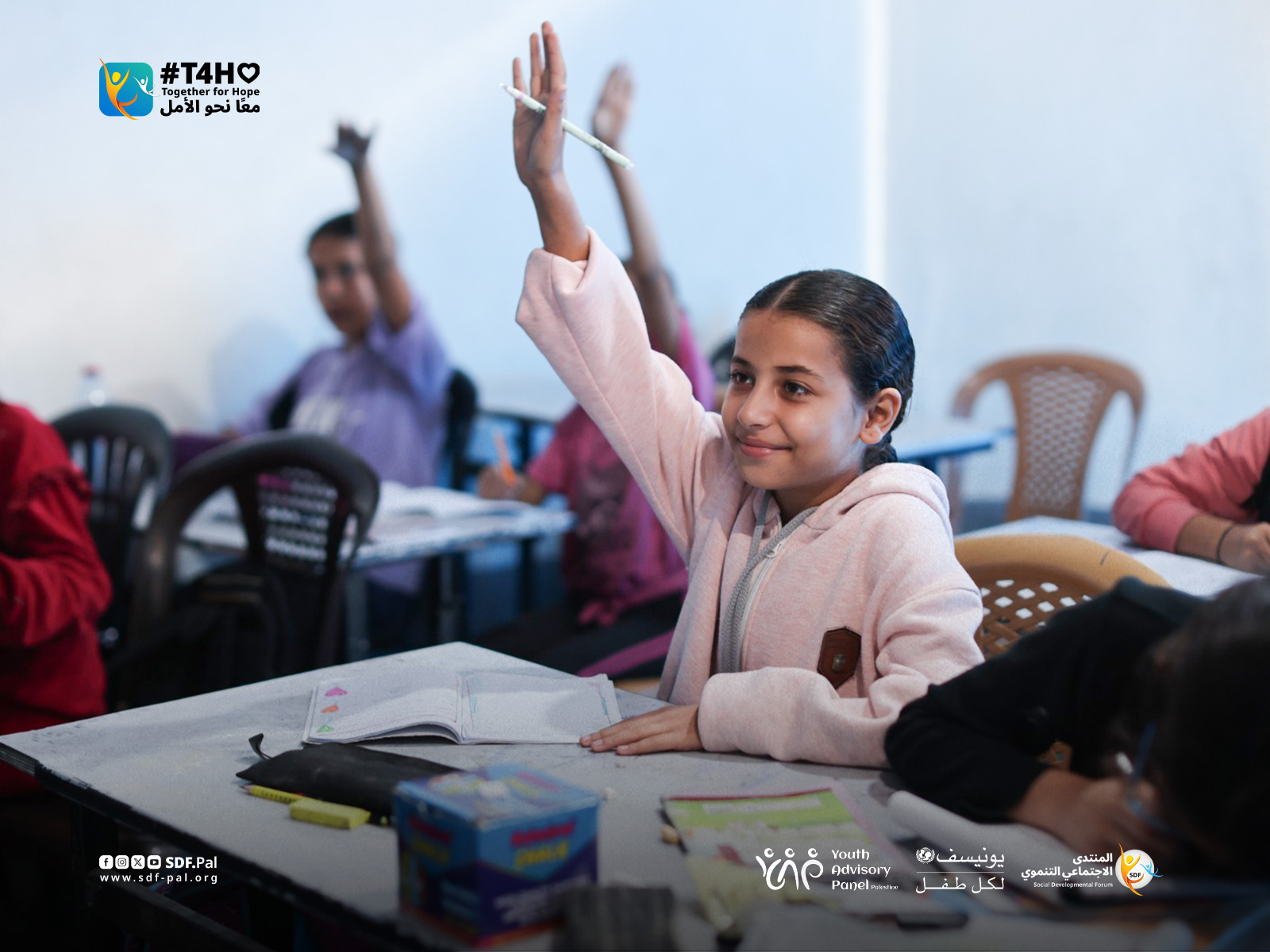
In the educational space, she found a warm, simple, and loving environment that felt like home. The teachers were approachable, explaining lessons in an easy-to-grasp way. Ghina returned home each day understanding everything without needing to review. Slowly but surely, she regained her confidence.
When she first returned to studying, Ghina feared she had forgotten everything. But while reviewing with her teachers, she realized: “My mind was absorbing information as if it were hungry for it. I remembered so much of what I thought I’d lost. I returned to my favorite life routine, preparing each day and going to study. That’s when I truly remembered: I am a student.”
Ghina and her family emphasize that the educational space was more than just classrooms, it was a lifeline that restored the safety the genocide had stolen. For her, returning to education was her first success story under the most extreme circumstances.
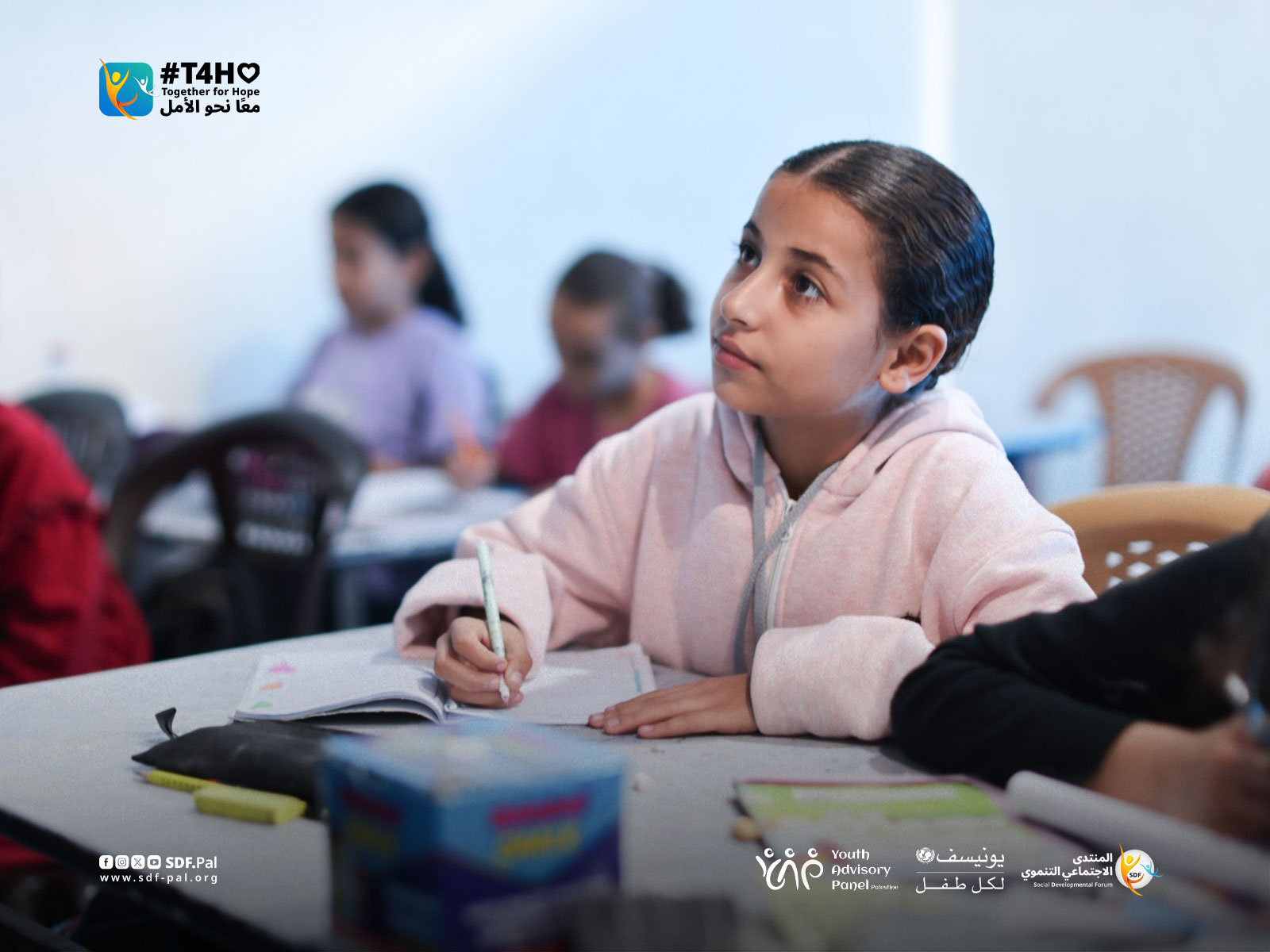
Today, Ghina dreams of continuing her studies to become a translator, a dream born from tragedy, which taught her multiple languages and the true meaning of communication and humanity.
Ghina doesn’t see herself as just a child who returned to school. Her story is one of of small, miraculous determination, a girl who lost her home, friends, and right to education, but found in all of it a path back to herself, and to hope.